Understanding the types of locks available is useful whether you are upgrading your home security, comparing options with a locksmith, or simply trying to understand what is already installed on your doors. This guide covers the most common lock types used in residential and commercial settings.
Deadbolts
The deadbolt is the most effective standard lock for exterior doors. Unlike a spring latch, a deadbolt extends a solid steel bolt into the door frame and can only be retracted with a key or thumb turn — it cannot be pushed back with a credit card or shimmed open. Single-cylinder deadbolts use a key on the outside and a thumb turn on the inside. Double-cylinder deadbolts require a key on both sides.
Knob Locks
Knob locks are common on interior residential doors and older exterior doors. The lock cylinder is built into the knob itself. The main weakness: the knob can be struck with a wrench or hammer to break the cylinder away from the door, defeating the lock entirely. For this reason, knob locks should not be used as the only security hardware on an exterior door — always pair them with a deadbolt.
Lever Handle Locks
Lever handle locks function similarly to knob locks but are easier to operate and required by ADA guidelines for commercial and public buildings. The lever mechanism is also vulnerable to being forced or broken if used on an exterior door without additional hardware.
Mortise Locks
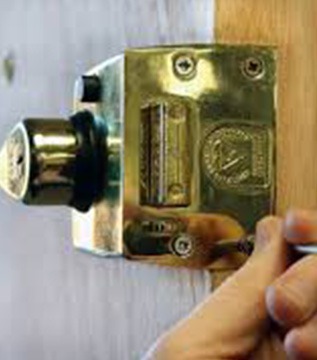
Mortise locks are recessed into a pocket cut into the edge of the door. They are heavy-duty locks common in commercial buildings and older homes. A mortise lock contains multiple mechanisms in one unit — a deadbolt, a latch, and sometimes a handle — making them more complex and more robust than a standard cylindrical lock.
Padlocks
Padlocks are portable locks used on gates, storage units, lockers, and chains. They vary enormously in quality — a cheap padlock can be cut with bolt cutters in seconds, while a high-security padlock with a hardened steel shackle and a pick-resistant cylinder provides meaningful protection.
Smart Locks
Smart locks replace or augment a standard deadbolt with electronic access control. They allow keyless entry via a PIN code, smartphone app, key card, or fingerprint. Smart locks vary significantly in quality; the lock mechanism itself should still be a Grade 1 or Grade 2 deadbolt. The smart component adds convenience and auditability, not necessarily more physical strength.
High-Security Locks
High-security locks are engineered to resist picking, bumping, and drilling. They feature hardened steel inserts, security pins, and restricted keyways that prevent unauthorized key copying. Brands like Medeco, Mul-T-Lock, and Abloy are well-known in this category.
Which Lock Is Right for You?
For most residential exterior doors, a Grade 1 deadbolt paired with reinforced door hardware provides the right balance of security and cost. Lock Angeles LA is available throughout Greater Los Angeles to assess your current hardware and recommend practical improvements. Call (310) 997-6304 to schedule a security consultation.