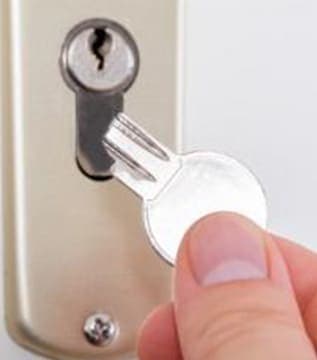
How a Key Breaks Off Inside a Lock
A broken key stuck in a door lock is a surprisingly common problem, and it usually comes down to metal fatigue. A worn or thin key flexes under pressure until it snaps, and the piece left in the cylinder blocks the lock entirely.
It tends to happen at the worst moments, when a key is forced because it feels stiff, when it's turned before it's fully seated, or when an old, brittle key finally gives out after years of use.
- Worn or thin keys that have flexed over years of use
- Forcing a key that isn't fully inserted into the cylinder
- Turning too hard on a lock that's stiff or needs lubrication
- Older cylinders where pins have worn grooves into the key
Why DIY Extraction Usually Makes It Worse
Trying to fish out a broken key with pliers, tweezers, or a dab of super glue is a common instinct, but it usually pushes the fragment deeper into the cylinder or shifts it sideways, where it can scratch the pins and damage the internal mechanism.
Once that happens, a simple extraction can turn into a full lock replacement. It's worth calling a locksmith before attempting a DIY fix, especially if the key has already snapped below the surface.
What We Do On-Site
Our locksmiths carry professional key extraction tools built to grip and remove broken key fragments without damaging the surrounding cylinder. In most cases the lock itself is left fully intact and reusable.
Once the broken piece is out, we cut a new key on the spot from a spare or by decoding the lock directly, then test the lock to confirm it turns and latches properly before we leave.
Need Residential Broken Key Extraction?
Call us now or send a message. Our mobile locksmiths serve all of Greater Los Angeles.